
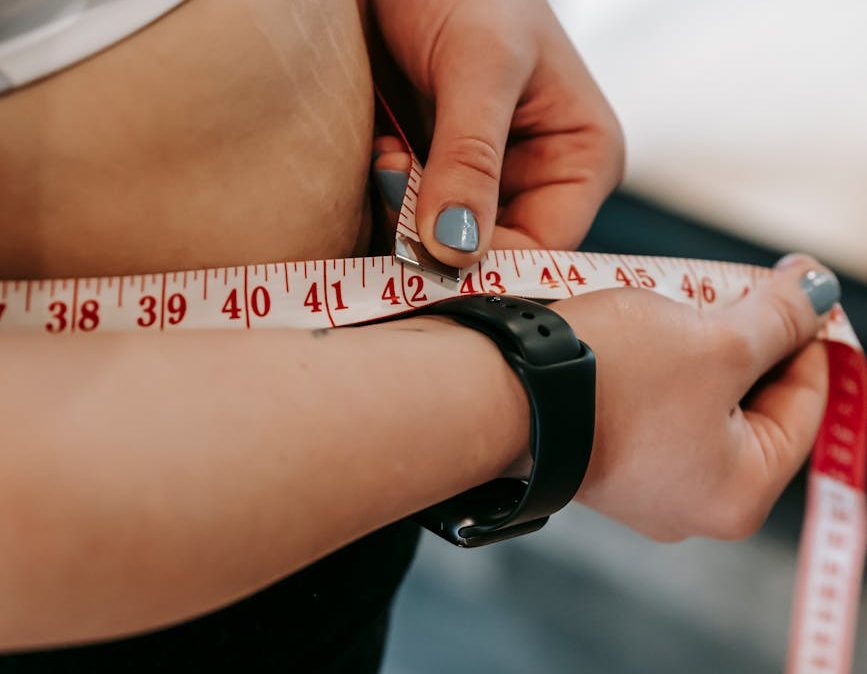
Perimenopause weight gain: Why eating less and exercising more can backfire
If your response to perimenopause weight gain or menopause weight gain is to exercise more and eat less, it’s worth pausing.
Because in this phase, that approach often works against your physiology – not with it.
What’s changing in this phase
Perimenopause and menopause are characterized by fluctuations and eventual declines in Estrogen and Progesterone.
These shifts don’t just affect reproductive health – they influence:
- how your body regulates stress
- how you store and mobilize fat
- how stable your blood sugar is
- how well you recover from exercise
There’s also increasing sensitivity in the HPA axis—your central stress response system.
The “Do More” trap of perimenopause weight gain
When or if, menopause and/or perimenopause weight gain shows up, the instinct is often:
- add more high-intensity workouts
- cut calories further
- push through fatigue
- ignore recovery
On paper, that seems logical. Physiologically, it is not a great strategy.
The role of stress physiology in perimenopause weight gain
When your overall stress load is high—whether from life, poor sleep, under-fuelling, or intense training – your body increases output of Cortisol.
Chronically elevated or dysregulated cortisol patterns are associated with:
- increased abdominal fat accumulation
- impaired glucose regulation
- increased appetite and cravings
- disrupted sleep cycles
(These are associations supported in the literature; individual responses vary.)
So when you layer:
- more intensity
- less food
- less recovery
…you can amplify the very signals that promote fat storage, dysregulation and perimenopause weight gain.
Why more exercise isn’t always better
Exercise is beneficial, that is not what I am saying — but I want to make it clear that dose and context matter.
Research shows that:
- Excessive high-intensity training without adequate recovery can increase stress hormone output
- Low energy availability (under-eating relative to expenditure) can impair metabolic and hormonal function
In perimenopause, where the system is already more stress-sensitive, this threshold can be lower than expected.
The shift that works better
This isn’t about doing nothing.
It’s about shifting from more stress → more output
to better signals → better response
What to do instead
1. Regulate the nervous system first
These are not “soft” strategies – they do have an impact on your physiology:
- 5 minutes of slow breathing (emphasizing long exhales)
- gentle yoga or mobility work
- 20–30 minutes of walking (ideally outdoors)
These inputs can help shift the nervous system away from a chronic stress state.
2. Build safety signals into your day
Your body responds to cues of safety and connection.
- positive social interactions
- laughter
- physical touch (hugs, connection)
- quiet, non-stimulating activities like reading
These are associated with increases in Oxytocin, which plays a role in modulating stress responses.
(Important context: oxytocin doesn’t “cancel” cortisol, but supportive social and calming inputs can help regulate overall stress physiology.)
3. Rethink movement
Keep moving – but adjust intensity and volume:
- prioritize walking
- include strength training (moderate, consistent)
- reduce frequency of all-out, high-intensity sessions
Consistency with adequate recovery is showing better responses and outcomes than overexertion.
4. Support metabolic stability
Instead of focusing on eating less, focus on eating appropriately:
- adequate total intake
- protein and fiber at meals
- balanced meals to support blood sugar stability
- avoiding large swings between restriction and overeating
Low energy availability (i.e too little food) is a known stressor on the body.
The reframe
Your body in this phase is not “broken.”
But it is more sensitive to stress signals.
So the strategy shifts from:
“How do I push harder?”
to:
“What signals am I giving my body – and how is it responding?”
Bottom line
Fat loss and metabolic health in perimenopause are less about doing more – and more about:
- regulating stress
- supporting recovery
- creating consistent, sustainable inputs
Regulation before restriction – That’s where progress starts.
My honest take: One of the most common reasons women join the Body Balance Program is perimenopause weight gain. But what often shifts along the way is the realization that the weight itself was rarely the whole issue — it was how they felt in their body. Exhausted, uncomfortable, constantly thinking about food, battling cravings, poor sleep, low energy, and feeling disconnected from themselves. And when those things begin to improve — when energy feels steadier, sleep becomes more restorative, cravings calm down, and they start supporting their body instead of constantly fighting it — the focus on the scale often softens. Because the real goal was never just weight loss. It was feeling like themselves again.
References
- North American Menopause Society
“The 2022 Hormone Therapy Position Statement”
https://www.menopause.org/docs/default-source/professional/nams-2022-hormone-therapy-position-statement.pdf - Journal of Clinical Endocrinology & Metabolism
Lovejoy JC et al. “Increased Visceral Fat and Decreased Energy Expenditure During the Menopausal Transition”
https://pubmed.ncbi.nlm.nih.gov/18332882/ - Obesity Reviews
Pasquali R. “Obesity and Androgens: Facts and Perspectives” (includes cortisol and fat distribution discussion)
https://pubmed.ncbi.nlm.nih.gov/16647374/ - Endocrine Society
“Primary Prevention of Cardiovascular Disease and Type 2 Diabetes in Patients at Metabolic Risk”
https://www.endocrine.org/clinical-practice-guidelines - Sports Medicine
Mountjoy M et al. “Relative Energy Deficiency in Sport (RED-S)”
https://bjsm.bmj.com/content/52/11/687 - Psychoneuroendocrinology
Heinrichs M et al. “Social Support and Oxytocin Interact to Suppress Cortisol and Subjective Responses to Stress”
https://academic.oup.com/edited-volume/28022/chapter-abstract/211827985?redirectedFrom=fulltext
Transparency
- The relationships between cortisol, fat distribution, and menopause are well-supported but multifactorial (not purely causal).
- The impact of stress regulation strategies is supported by physiological and behavioral research, though individual responses vary.
- Exercise remains beneficial; the emphasis here is on dose, recovery, and context, not avoidance.